
API and sulfur
API gravity and sulfur are only the first screen. The real value comes from how the refinery converts the barrel into saleable products.
炼厂复杂度 会改变整个石油链条中的供应可得性、调和空间、运费敞口、运营风险以及价格形成。
本页把基础设施、规格、物流与交易行为放在同一框架下,帮助买方、卖方、租船方和炼厂把市场读成一个系统,而不是零散新闻。
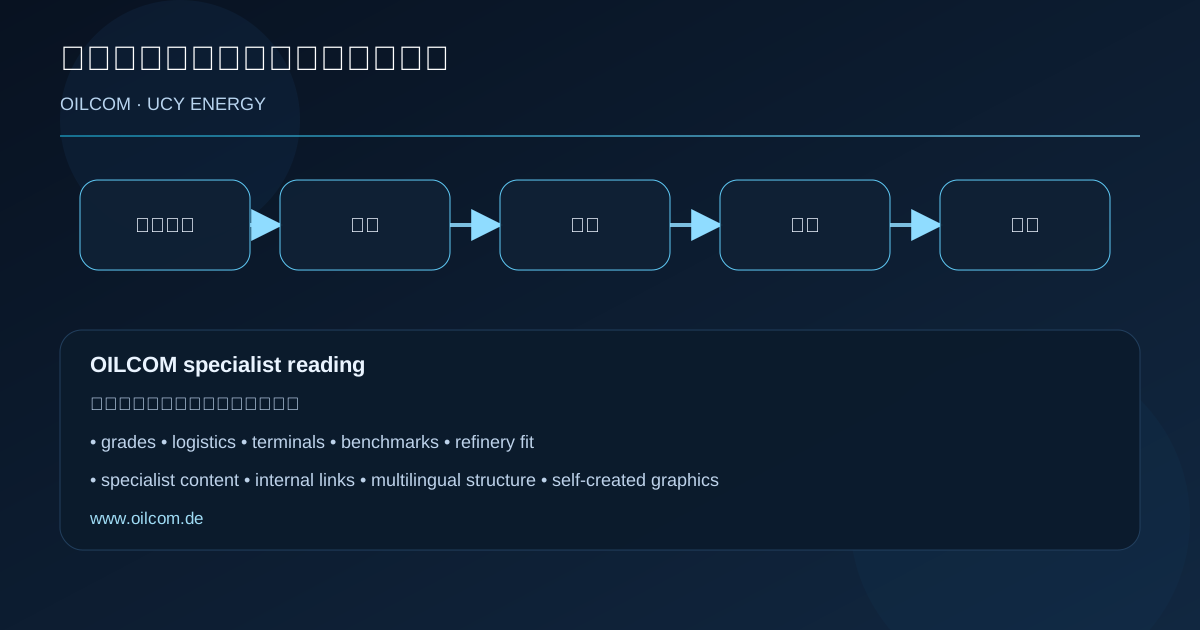
自制图形突出展示了采购、货盘计划、提名、库存控制和下游投放中常见的重要流程与决策点。
为了 SEO 和专业可读性,文本围绕清晰实体、商业术语、内部链接以及对品种、枢纽、航线和炼厂适配的反复引用来组织。
炼厂复杂度、收率价值与原油适配
API gravity and sulfur are only the first screen. The real value comes from how the refinery converts the barrel into saleable products.
Cokers, hydrocrackers and residue-conversion assets can radically increase the value of heavier or sourer grades.
Hydrogen balance, desulfurization severity and treating limits often decide whether a grade is attractive or operationally tight.
The same crude can look excellent in one margin environment and mediocre in another because cracks and demand move.
Lighter, sweeter barrels often clear better when conversion depth is limited.
Deep-conversion sites can monetize heavy or sour grades if the discount is large enough.
Diesel and jet demand can shift the preferred crude basket even without changing flat price.
Residual outlets, bunker demand and sulfur rules affect the final value of the barrel.
这些简短回答面向商业读者,帮助他们在进入品种、航线或炼厂的细分页面之前先建立快速判断。
Because configuration, hydrogen, sulfur limits, product slate and local demand change the net yield value of the barrel.
Refinery fit is the commercial and operational match between a crude’s properties and the refinery’s hardware, constraints and margin environment.
Yes. In the right refinery with the right discount, conversion capacity and product market, it can be very attractive.
Refinery planners, crude buyers, trading teams, analysts and anyone comparing grades by processing value rather than headline quality alone.
通过相关阅读路径,可以从总体市场结构继续进入具体原油品种、产地、出口系统和全球地图语境。