Why a crude name is not enough and how density, sulfur, cut structure and contaminants shape real value.
All visuals in this package are self-created SVG graphics suitable for commercial deployment without third-party image rights.
A professional crude review starts with what the name does not tell you. Cargo history, field mix, contaminants, seasonal handling conditions and actual cut behaviour all matter.
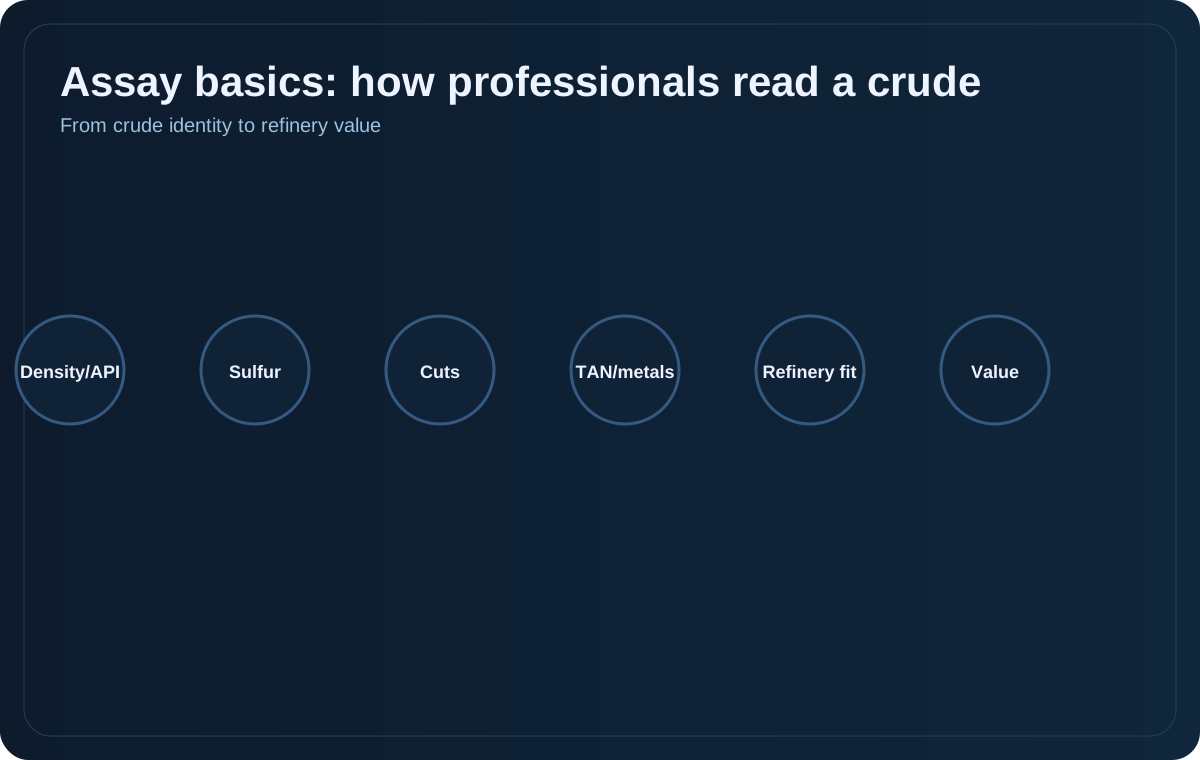
That is why serious buyers move from labels to assay language: density, sulfur, metals, acidity, vapor pressure, pour characteristics and expected yield distribution.
A barrel that looks cheap can become expensive in the wrong system if hydrogen demand, sulfur removal, residue upgrading or product slate fit are misread.
Conversely, a more difficult barrel can be commercially attractive in the right refinery if conversion depth and downstream placement create enough uplift.
Professionals compare barrels in relation to alternatives, not in isolation. They ask what can replace the cargo, what the freight geometry looks like, what the residue burden is and how stable the supply system appears.
The answer is rarely one number. It is a portfolio of operational and commercial consequences.
The flowchart on this page is a self-created SVG used to illustrate route logic without relying on third-party image rights.
Self-created flowchart