
Flat price and basis
The flat-price benchmark sets the hedge axis; the basis shows how physical barrels diverge from paper exposure.
Benchmarks are not abstract labels: they anchor hedge books, differential negotiations, refinery economics and substitution logic between named grades.
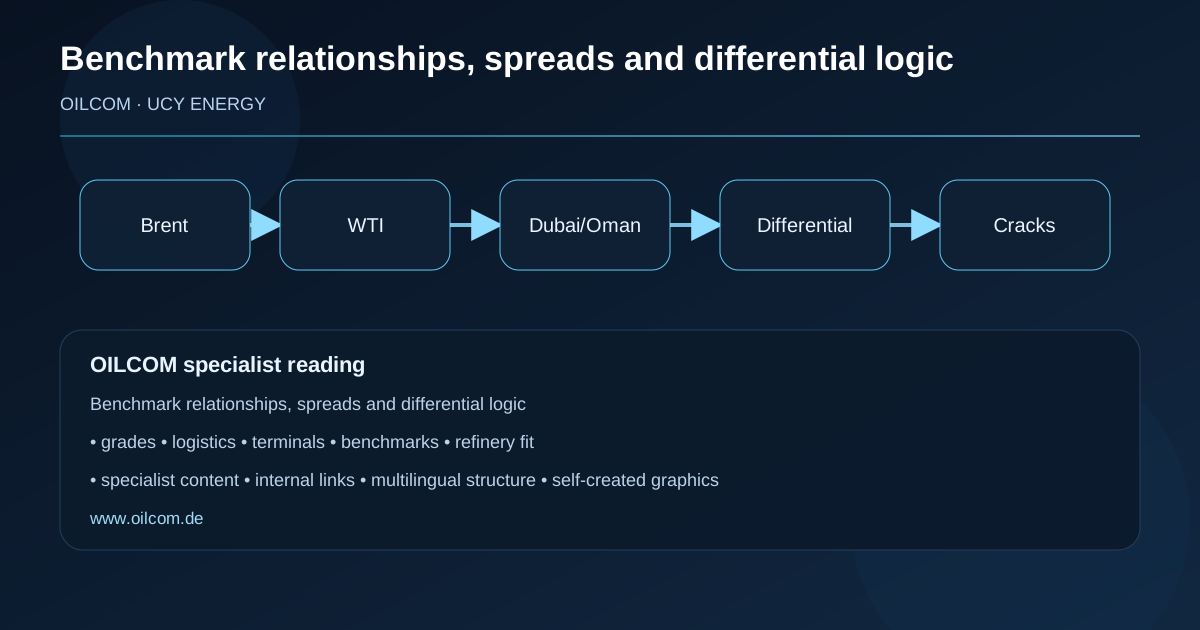
benchmark relationships changes availability, blending room, freight exposure, operational risk and price formation across the oil chain.
The page links infrastructure, specification, logistics and trading behaviour so that buyers, sellers, charterers and refiners can read the market as a system instead of isolated headlines.
The self-created graphic highlights the operational sequence and the main decision points that usually matter for procurement, cargo planning, nominations, inventory control and downstream placement.
For SEO and specialist readability, the text is structured around clear entities, commercial terms, related links and repeated references to grades, hubs, routes and refinery fit.
Benchmark relationships, spreads and differential logic
The flat-price benchmark sets the hedge axis; the basis shows how physical barrels diverge from paper exposure.
Differentials and official selling prices translate quality, freight, region and market power into a commercial premium or discount.
Grades that are technically close may still clear differently when benchmark family, freight route or refinery configuration changes.
Crude pricing cannot be read in isolation from product cracks, marine fuel demand, middle-distillate balance and refinery yield value.
Brent-related logic influences many light-sweet and waterborne substitution baskets.
WTI-linked pricing interacts with inland logistics, exports and refinery pulling power.
Dubai/Oman-linked structures remain critical where sour crude and Asian demand meet.
Refined-product margins feed back into crude differentials through refinery run economics.
These short answers are written for commercial readers who need a fast orientation before they move into grade-specific, route-specific or refinery-specific pages.
Because contracts, hedges, OSP comparisons and substitution decisions are normally built around benchmark families.
It is the commercial premium or discount of a physical barrel versus its chosen benchmark, shaped by quality, route and market balance.
Yes. A refinery configured for sour or heavy barrels may value benchmark-linked grades very differently from a simple refinery.
Trading teams, commercial analysts, refinery planners, procurement desks and readers comparing named grades across regions.
Use the related reading paths to move from general market structure to named grades, origins, export systems and world-map context.