
A crude name is a commercial shorthand
A grade name can point to a field, a blend, a terminal stream or a benchmark family. Traders therefore ask which exact stream, loading point and contract definition is meant.
A trading-oriented directory of named crude streams, benchmark families and export grades used by refiners, traders and analysts.
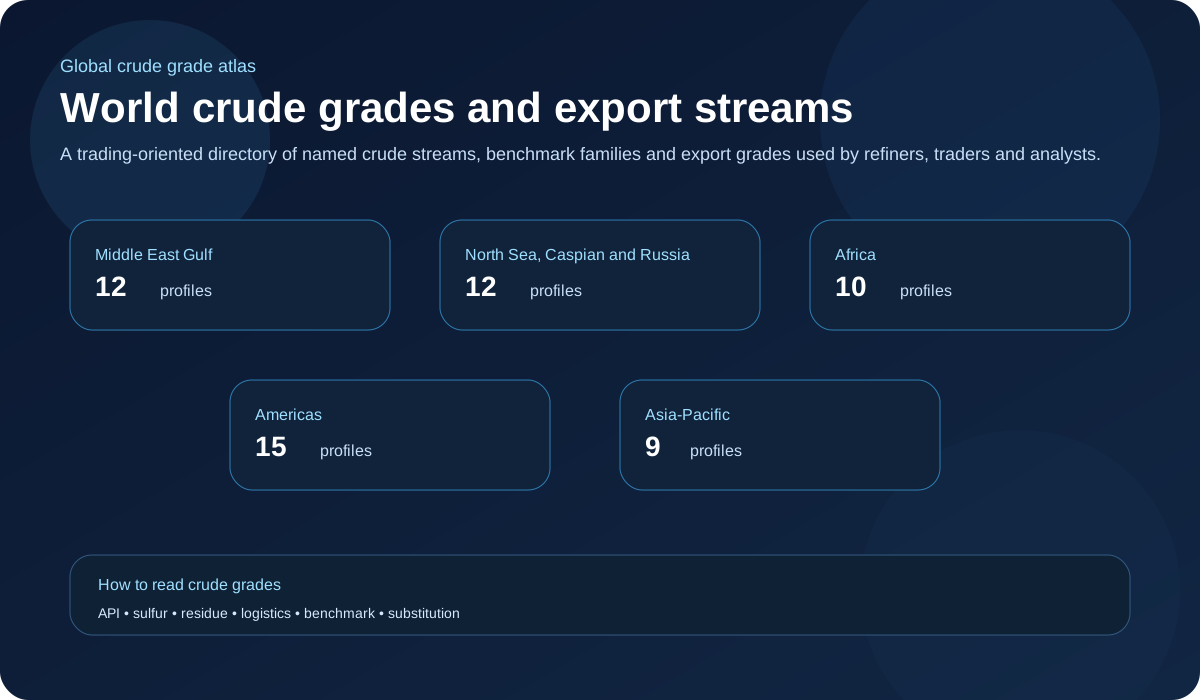
World crude grades and export streams
There is no single timeless official list of world crude grades. Names can refer to fields, export blends, terminal streams, benchmark baskets or periodically re-specified commercial families.
For commercial work, what matters is not only the country of origin. Professionals compare density, sulfur, residue behaviour, metals, acidity, logistics, benchmark linkage and how substitutable a barrel is inside a refinery slate.
This atlas therefore groups grades by trading region and follows the grades that are most visible in public assay libraries, benchmark methodology guides and export market practice.
Use the directory below as a commercial map, not as a claim that every cargo in the world is chemically identical from month to month.
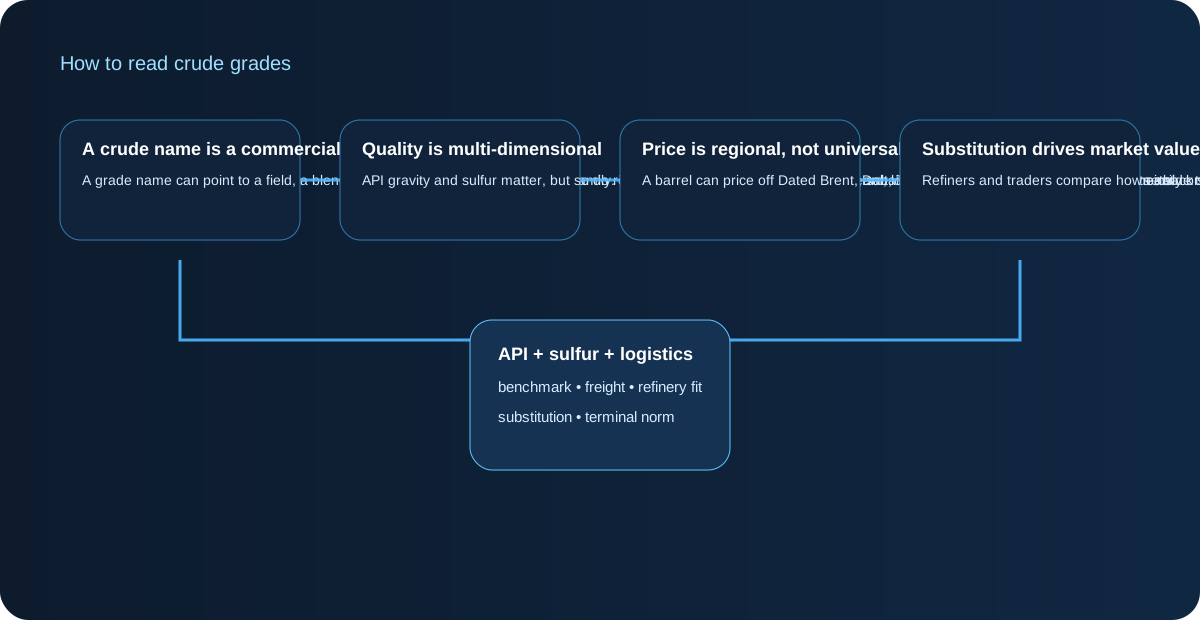
A grade name can point to a field, a blend, a terminal stream or a benchmark family. Traders therefore ask which exact stream, loading point and contract definition is meant.
API gravity and sulfur matter, but so do residue behaviour, metals, acidity, wax, salt, TAN, heating needs and unit constraints inside the refinery.
A barrel can price off Dated Brent, Dubai/Oman, Murban, WTI/Cushing or local netback structures. Freight and destination optionality often matter as much as lab quality.
Refiners and traders compare how easily one grade can replace another in a crude slate without upsetting yield, sulfur, hydrogen or residue balances.
Saudi Arabia · 39–40 API · 1.0–1.2 S
Dubai/Oman-linked OSP logic
Saudi Arabia · 33–34 API · 1.7–1.9 S
Dubai/Oman-linked OSP logic
Saudi Arabia · 30–31 API · 2.4–2.7 S
Dubai/Oman-linked OSP logic
Saudi Arabia · 27–28 API · 2.8–3.0 S
Dubai/Oman-linked OSP logic
United Arab Emirates · 40.0 API · 0.778 S
IFAD Murban with Dubai-linked regional comparison
United Arab Emirates · 33.1 API · 2.07 S
Murban-linked regional pricing
United Arab Emirates · 38–40 API · ~1.1 S
Murban-linked regional pricing
Oman · 31–33 API · 1.0–1.5 S
DME Oman and Dubai-linked Asian sour pricing
United Arab Emirates / Oman · 31–32 API · ~1.5 S
Core Asian medium-sour benchmark family
Qatar · 27–28 API · ~1.9 S
Dubai-linked Asian sour pricing
Iraq · ~29 API · ~3.0 S
Dubai/Oman-linked Iraqi OSP logic
Iraq · 23–24 API · ~4.0 S
Dubai/Oman-linked Iraqi OSP logic
United Kingdom / Norway · ~38 API · ~0.37 S
Dated Brent and Atlantic Basin pricing
United Kingdom · 42.4 API · medium sulfur S
Dated Brent / BFOET
Norway · 39.9 API · low sulfur S
Dated Brent / BFOET
Norway · 38.9 API · low sulfur S
Dated Brent / BFOET
Norway · 37.5 API · low sulfur S
Dated Brent / BFOET
Norway · 28.7 API · medium sulfur S
North Sea waterborne pricing
Azerbaijan · 35.6 API · 0.19 S
Dated Brent-linked Caspian pricing
Azerbaijan · 39.0 API · 0.16 S
Mediterranean and Dated Brent-linked pricing
Kazakhstan · 46.6 API · 0.58 S
Mediterranean / Dated Brent-linked pricing
Russia · 31–32 API · 1.6–1.8 S
Urals differential versus Dated Brent
Russia · 34–35 API · ~0.5 S
Asia waterborne pricing versus Dubai and Brent markers
Russia · 39.7 API · 0.17 S
Far East Russia pricing versus Dubai and Dated Brent
Nigeria · 33.4 API · 0.16 S
West Africa light sweet pricing versus Dated Brent
Nigeria · 37.3 API · 0.12 S
West Africa light sweet pricing versus Dated Brent
Nigeria · 31–32 API · ~0.16 S
West Africa light sweet pricing versus Dated Brent
Nigeria · 27.7 API · 0.26 S
West Africa medium sweet pricing
Nigeria · 27.4 API · 0.29 S
West Africa medium sweet pricing
Angola · 29.9 API · 0.33 S
Angolan sweet crude pricing
Angola · 23.3 API · 0.52 S
Angolan heavy sweet pricing
Angola · 29.2 API · 0.59 S
Angolan medium sweet pricing
Angola · 24.6 API · 0.40 S
Angolan heavy sweet pricing
Algeria · ~44 API · ~0.1 S
Mediterranean light sweet pricing
United States · 47.5 API · 0.05 S
WTI / Cushing benchmark
United States · 38–39 API · ~0.2 S
US Gulf Coast light sweet pricing
United States · 28.5 API · high sulfur S
USGC sour waterborne pricing
United States · 43.8 API · 0.09 S
WTI-linked inland pricing
Canada · 19–22 API · 2.8–3.5 S
WCS heavy discount structure
Canada · 19.5 API · 3.87 S
Canadian heavy blend pricing
Canada · 19.8 API · 3.83 S
Canadian heavy blend pricing
Mexico · 21–22 API · 3.4 S
Mexico heavy sour export pricing
Mexico · 32–33 API · 1.8 S
Mexico medium sour export pricing
Mexico · 38–39 API · 0.73–0.95 S
Mexico light crude export pricing
Canada · 24.2 API · 0.8 S
Atlantic Canada waterborne pricing
Canada · 33.9 API · 0.63 S
Atlantic Canada waterborne pricing
Guyana · 31.9 API · 0.59 S
Guyana Atlantic pricing
Guyana · 29.6 API · 0.60 S
Guyana Atlantic pricing
Guyana · 33.9 API · 0.41 S
Guyana Atlantic pricing
Malaysia · 45.8 API · 0.03 S
Asia-Pacific light sweet pricing
Indonesia · 32.8 API · 0.32 S
Regional Asia crude pricing
Indonesia · 37.2 API · 0.068 S
Regional Asia crude pricing
Indonesia · 21.7 API · 0.182 S
Regional Asia heavy sweet pricing
Vietnam · 38.5 API · 0.051 S
Regional Asia light sweet pricing
China · 31.93 API · 0.13 S
China domestic and Asia spot comparisons
China · 24.2 API · 0.84 S
China domestic and Asia spot comparisons
Malaysia · 38.61 API · 0.06 S
Regional Asia light sweet pricing
Papua New Guinea · 54.3 API · 0.02 S
Regional Asia light sweet pricing
Track crude grades by origin country, export route and commercial relevance.
A crude grade is not only an assay. It is also a loading window, parcel size and freight position.
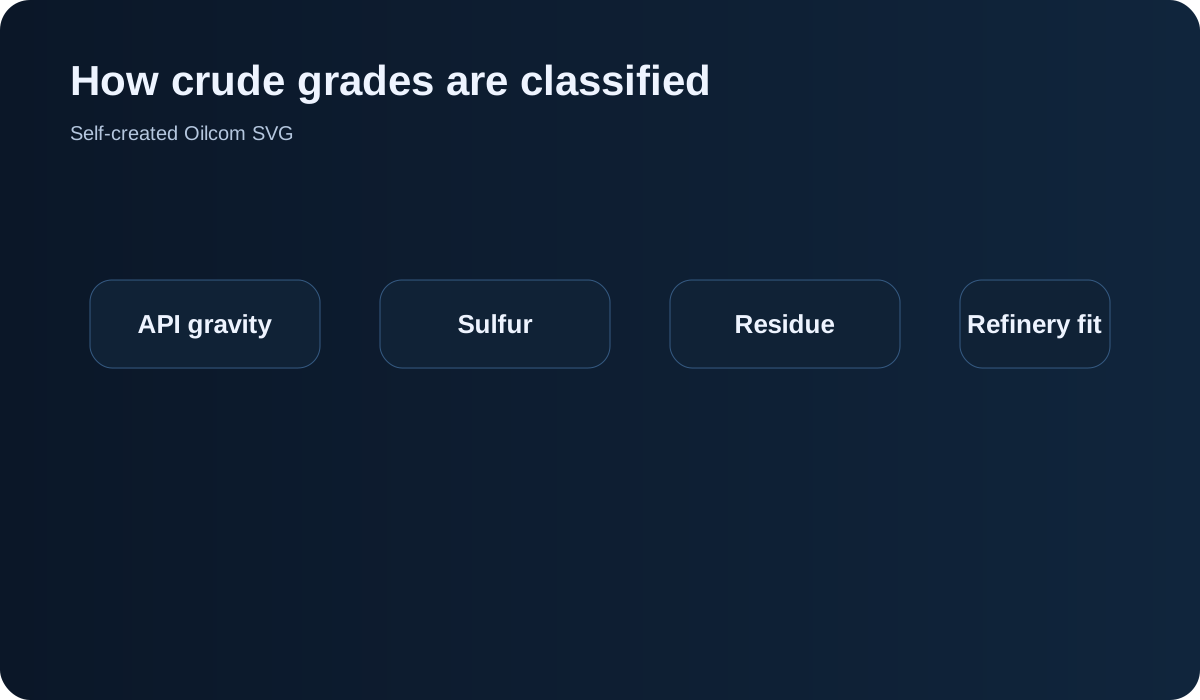
API gravity, sulfur, residue behaviour and refinery fit determine how traders and refiners read a named grade.