
Freight and scale
Larger ships can reduce unit freight on the right route, but they need water depth, berth support and enough cargo concentration.
Ship class is a pricing input: it affects freight, terminal compatibility, STS use, draft limits, cargo size, insurance exposure and the number of viable routes.
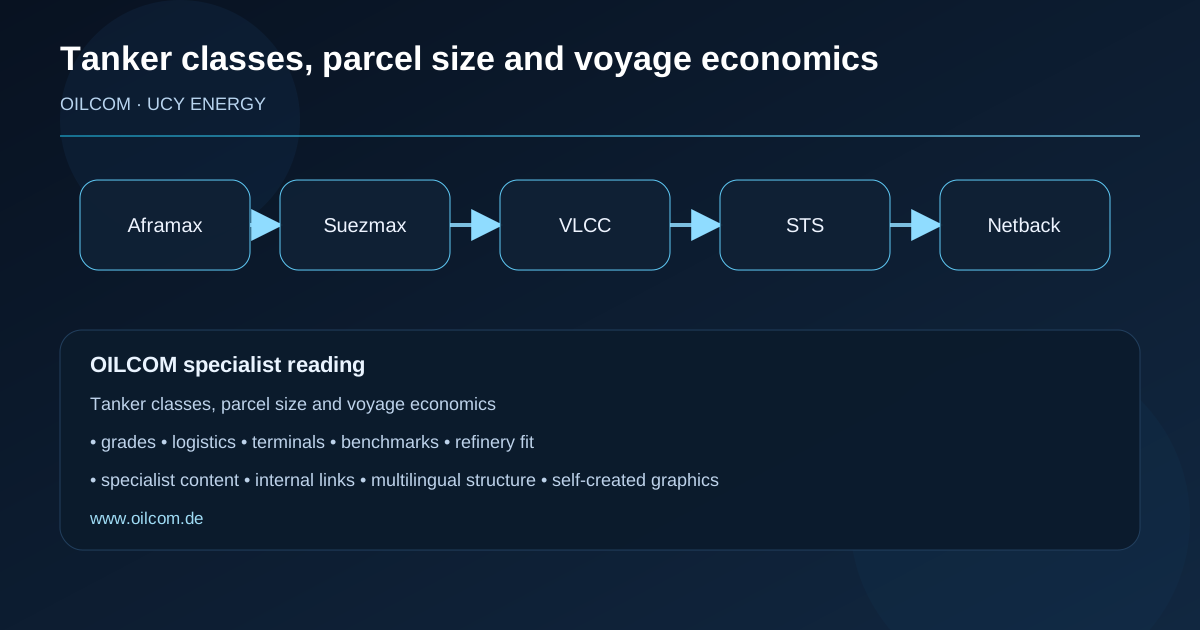
tanker classes changes availability, blending room, freight exposure, operational risk and price formation across the oil chain.
The page links infrastructure, specification, logistics and trading behaviour so that buyers, sellers, charterers and refiners can read the market as a system instead of isolated headlines.
The self-created graphic highlights the operational sequence and the main decision points that usually matter for procurement, cargo planning, nominations, inventory control and downstream placement.
For SEO and specialist readability, the text is structured around clear entities, commercial terms, related links and repeated references to grades, hubs, routes and refinery fit.
Tanker classes, parcel size and voyage economics
Larger ships can reduce unit freight on the right route, but they need water depth, berth support and enough cargo concentration.
A terminal may be commercially open yet physically restrictive for a specific tanker class or loading programme.
STS can create scale and routing flexibility, but it also adds operational complexity, timing risk and documentary sensitivity.
War-risk, sanctions exposure, weather, canal constraints and regional controls can quickly change the viable vessel class.
Long-haul crude routes often depend on deepwater loading, STS options or hub transfer logic.
Regional routes can reprice rapidly when basin balance or port limits change.
Some logistics chains split between crude tankers and product tankers depending on refinery output and market pull.
Fuel rules and emissions constraints influence operating cost and fleet choice.
These short answers are written for commercial readers who need a fast orientation before they move into grade-specific, route-specific or refinery-specific pages.
Because parcel size, draft, route length and freight cost directly change which buyers can economically take a cargo.
STS can bridge draft restrictions, build larger parcels and connect crude to vessel classes that a loading port cannot serve directly.
If transport cost rises or vessel choice narrows, the net value of a grade can fall even when flat price stays stable.
Shipping desks, traders, charterers, analysts and commercial teams comparing route economics and discharge optionality.
Use the related reading paths to move from general market structure to named grades, origins, export systems and world-map context.