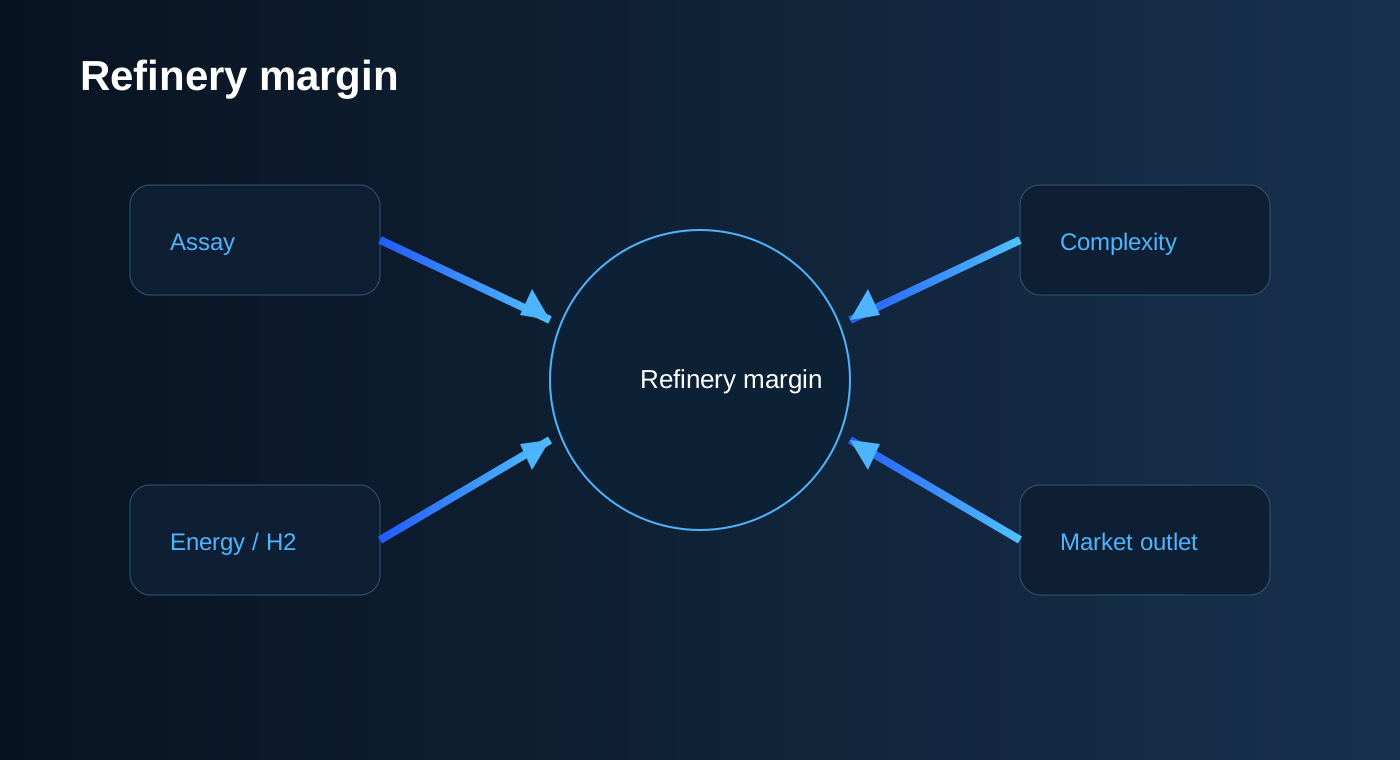
Refinery economics is more than crude price minus product price. Margin depends on assay, unit complexity, hydrogen, utilities, sulfur handling, blending room and local demand.
All visuals in this package are self-created SVG graphics suitable for commercial deployment without third-party image rights.
A barrel that looks cheap on paper can lose value once cut yields, metals, acidity, catalyst stress, freight and residue disposal are fully counted.
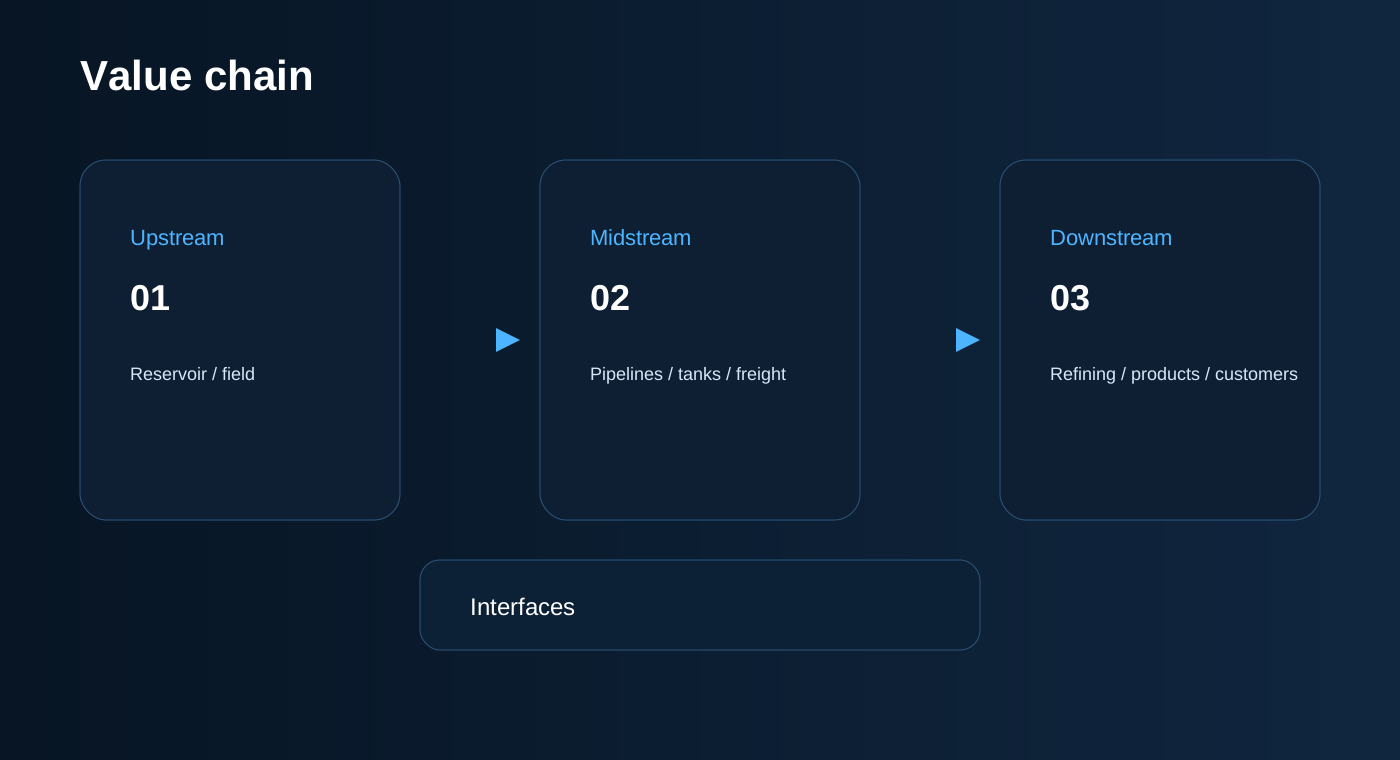
Professional readers use this module to connect price, logistics, quality, documentation, timing and counterparty risk in one operating view.
Professional teams match the crude slate to the unit set, the sulfur pool, the product outlet and the turnaround calendar before they talk about “cheap feedstock”.
Commercial edge appears where one party removes friction faster than another and converts that into a financeable contract, a safer delivery window or a stronger delivered margin.
Before price negotiations go deep, teams usually test the physical limit, the specification limit, the document limit and the credit limit.
Operational discipline comes from aligning nominations, tank windows, inspection evidence, line availability, freight exposure and payment mechanics before the molecule reaches its first bottleneck.
All visuals in this package are self-created SVG graphics suitable for commercial deployment without third-party image rights.
Bottlenecks usually appear when timing, tank space, blend room, credit lines, sanctions screening, sustainability evidence or substitution options do not move at the same speed.
Refinery economics is more than crude price minus product price. Margin depends on assay, unit complexity, hydrogen, utilities, sulfur handling, blending room and local demand.
This page points into related modules on margin logic, market actors, logistics, trade finance, freight, risk and refinery fit.
Open the linked module for the next layer of commercial detail.
Open the linked module for the next layer of commercial detail.
Open the linked module for the next layer of commercial detail.
Open the linked module for the next layer of commercial detail.
Open the linked module for the next layer of commercial detail.
Open route →
New module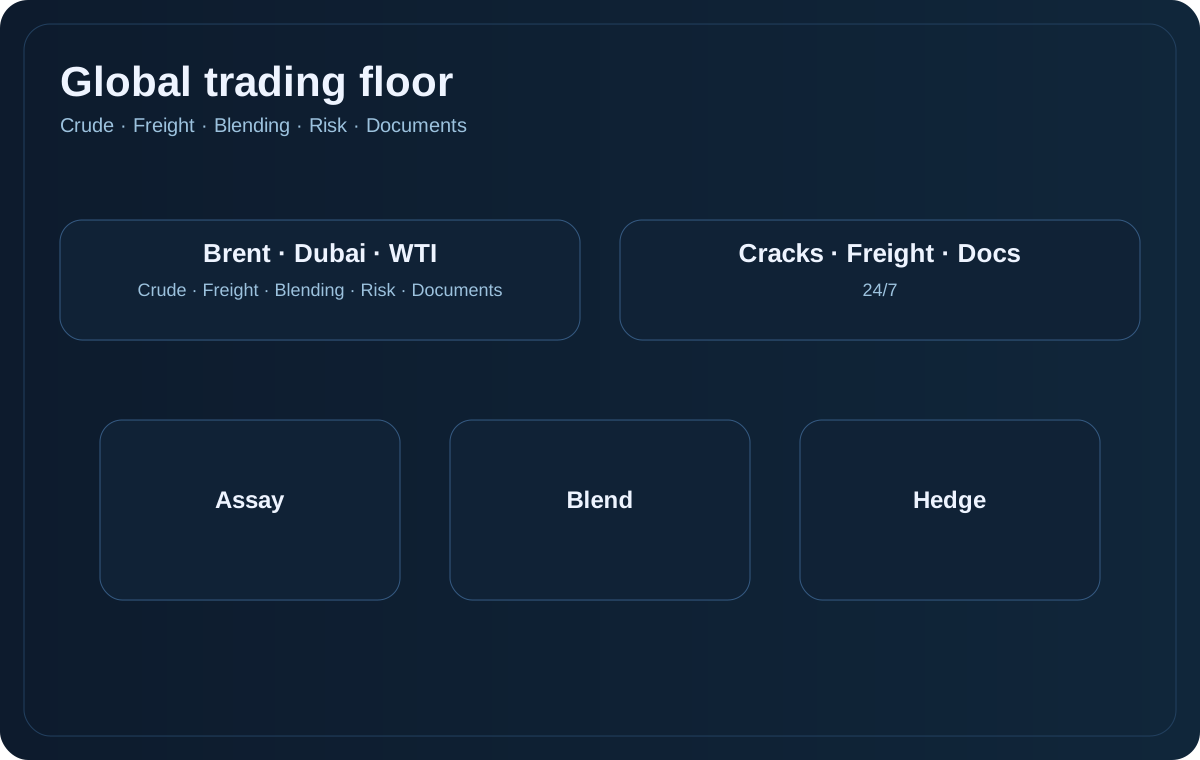
Open the linked module for the next layer of commercial detail.
Open route →
New module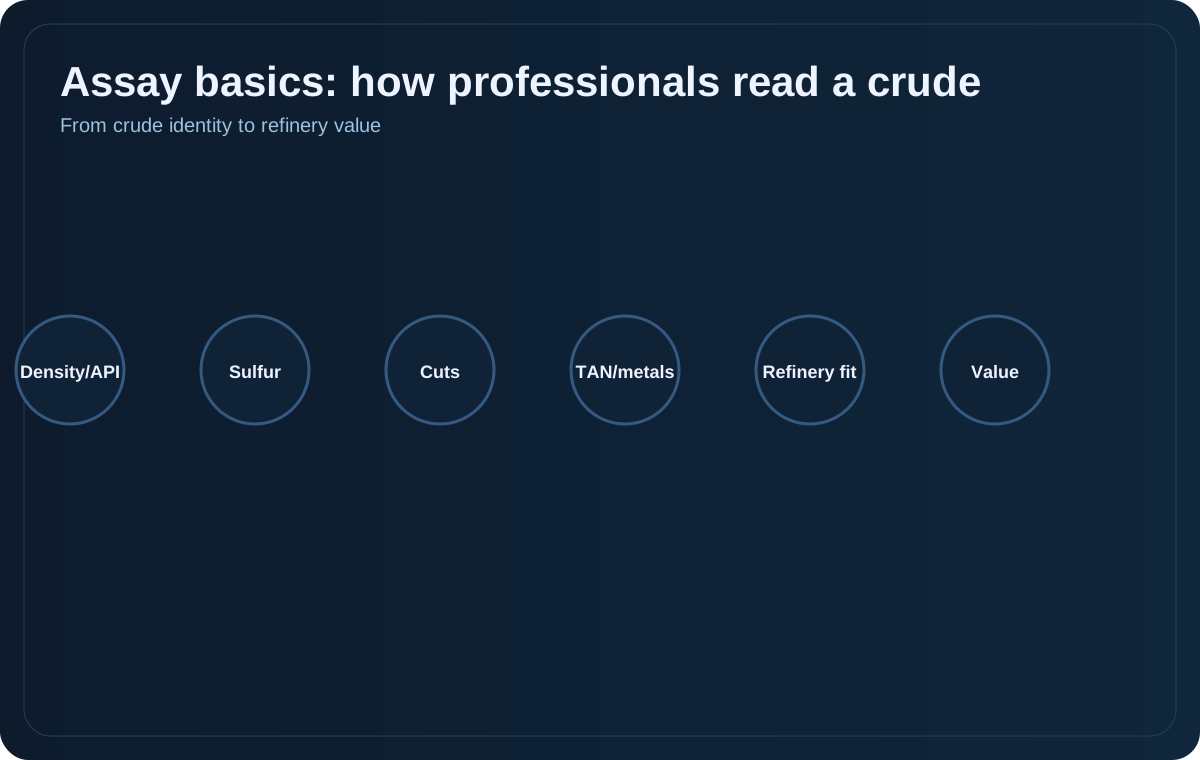
Open the linked module for the next layer of commercial detail.
Open route →